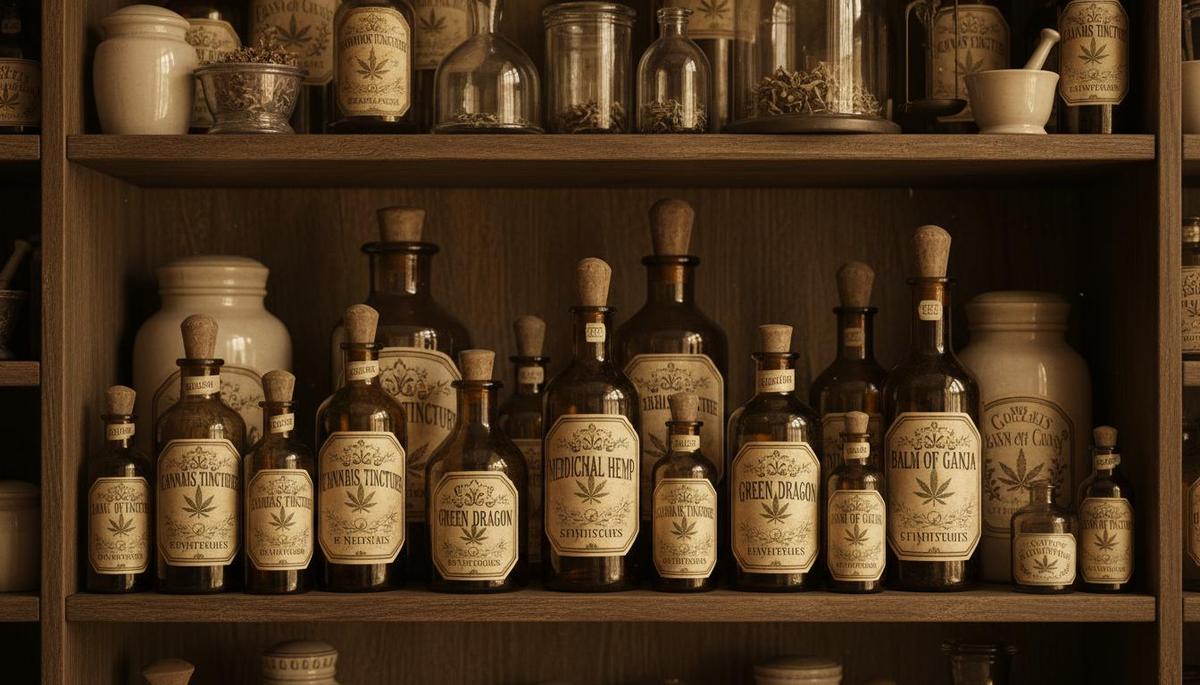
While THC beverages may seem like a modern innovation, humans have been consuming cannabis in liquid form for thousands of years. From ancient ritual drinks to Victorian patent medicines to the sophisticated nano-emulsified seltzers of today, the history of cannabis beverages reflects broader cultural attitudes toward the plant. Understanding this historical and cultural context enriches our appreciation of modern THC drinks and highlights how dramatically perspectives have shifted.
Ancient History
India: Bhang (1500 BCE)
Bhang, a cannabis-infused drink made with milk, spices, and sometimes yogurt, has been consumed in India for at least 3,500 years. It's associated with the Hindu god Shiva and is consumed during religious festivals including Holi. Bhang shops operate legally in some Indian states. This is perhaps the oldest continuously consumed cannabis beverage.
Ancient China and Central Asia
Archaeological evidence from China's Xinjiang region suggests cannabis was used in ritual beverages as early as 1000 BCE. The ancient Scythians of Central Asia reportedly consumed cannabis in steam baths and beverages during funeral rites, as described by Herodotus.
Middle East and North Africa
Various cannabis-infused drinks emerged across the Islamic world, where alcohol was prohibited but cannabis often tolerated. Hashish was consumed in drinks across the Middle East and North Africa for centuries.
19th and Early 20th Century
Patent Medicines
In the 1800s and early 1900s, cannabis extracts were common ingredients in American and European patent medicines. Tinctures, elixirs, and cordials containing cannabis were sold as treatments for various ailments. These were effectively cannabis beverages, though marketed as medicine.
Prohibition-Era Substitution
During alcohol Prohibition in the United States (1920-1933), some Americans turned to cannabis as an alternative intoxicant. Cannabis tinctures and beverages saw increased use during this period.
Mid-20th Century Suppression
The Marihuana Tax Act of 1937 effectively criminalized cannabis in the United States. The Controlled Substances Act of 1970 made it Schedule I. During this period, cannabis beverages disappeared from legal commerce. Consumption shifted entirely to underground markets, primarily through smoking.
The Modern Revival
Medical Cannabis Era (1996-2012)
California's Proposition 215 in 1996 began the medical cannabis movement. Early medical markets included edible and drinkable products, though quality was often poor. Homemade cannabis drinks were common among patients.
Recreational Legalization (2012-Present)
Colorado and Washington's 2012 legalization opened commercial markets. Early THC beverages were crude: inconsistent dosing, poor taste, oily texture. Brands like Keef pioneered the modern THC soda starting around 2010.
The Nano-Emulsification Revolution (2018-Present)
The 2018 Farm Bill legalized hemp, enabling nationwide THC beverage sales. Nano-emulsification technology solved the fundamental problems of cannabis beverages: taste, consistency, and absorption. The market exploded with new brands and products.
Cultural Significance
Cannabis beverages represent a shift from counterculture to mainstream. The beverage format normalizes cannabis as just another adult drink. THC sodas parallel the craft beer and spirits movements. Social consumption through beverages builds community. The format appeals to demographics that wouldn't smoke cannabis.
Conclusion
THC beverages are both ancient and cutting-edge. Humans have consumed cannabis in liquid form for millennia, but only in the past decade has technology enabled products that rival conventional beverages in quality and consistency. The modern THC beverage industry stands on the shoulders of ancient traditions while pushing into new territory with nano-emulsification, precise dosing, and sophisticated flavor development. Understanding this history connects contemporary consumers to a lineage of cannabis beverage use that stretches back thousands of years.